Stump Removal
Eastman GA & Dodge County
Professional stump removal in Eastman, GA — stumps ground flush or below grade following clearing or as a standalone service. Stump grinding in Dodge County eliminates drainage problems and termite risk, leaving the surface clean and level.
Stump Removal in Eastman for Dodge County Properties
A stump left in the ground after tree removal is not simply an eyesore — in Dodge County's red clay soil, it becomes an active problem. The decaying root system creates voids in the soil as it breaks down over the years. These voids cause settling, sinking, and drainage disruption in the surrounding ground. On lots where construction will follow clearing, stumps left in place create foundation and drainage issues that are expensive to discover and fix after the build is complete.
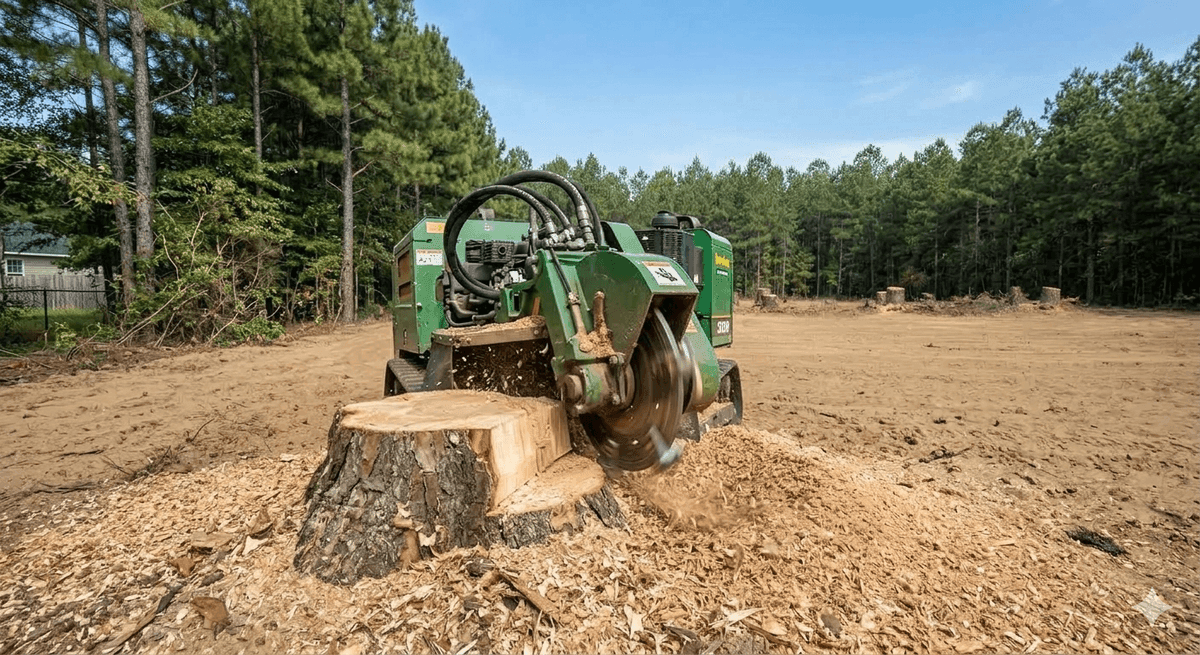
Stump grinding removes the stump and the upper root mass to a depth below grade — typically 6–12 inches depending on the intended use of the cleared area. For construction builds, stump removal in Eastman GA requires grinding deeper or fully grubbing the stump to ensure the cleared pad is solid and stable under a foundation or slab. For general access or landscaping improvements, a standard stump grinding depth is sufficient.
We handle stump removal in Dodge County as part of a full land clearing and stump removal project or as a standalone service — including properties where trees have been removed previously and the stumps were left behind.
How much does stump removal cost in Dodge County?
Stump removal in Eastman, Dodge County, Georgia costs $150–$500 per stump for grinding, or $300–$800 for full root-ball extraction depending on stump diameter and root depth. Dodge County's clay-rich Ultisol holds roots tightly, making stump grinding far more efficient than pulling — and grinding leaves the root mass to decompose naturally, which prevents the soil subsidence that plagues excavated sites in Middle Georgia.
Why Stump Removal in Dodge County Matters
Four specific reasons Eastman GA property owners schedule stump removal rather than leaving stumps in place.
Drainage Problems
As stumps decay in Dodge County's clay soil, the void spaces left by rotting roots disrupt drainage patterns — causing pooling and soft spots in the surrounding yard. Stump removal in Eastman most often starts with drainage complaints from property owners.
Termite & Pest Attraction
Decaying wood stumps attract wood-boring beetles, termites, and carpenter ants. In middle Georgia's climate, these populations spread quickly — making prompt stump grinding in Eastman GA worthwhile before they reach nearby structures.
Foundation & Construction Risk
Stumps left below a construction pad settle and create voids as they decay. On Dodge County building sites, stump removal before grading prevents foundation cracking, slab movement, and drainage failures under structures.
Access & Usability
Stumps block mowing, equipment movement, and general use of cleared areas. Stump removal cost in Dodge County is almost always less than the long-term loss of usable land on agricultural and residential lots.
Stump Removal Eastman GA — FAQ
How deep does stump grinding go?
Stump grinding in Eastman GA typically removes material 6–12 inches below the existing soil surface. For general landscaping or access improvements, grinding 4–6 inches below grade allows grass or plants to grow over the area. For construction builds in Dodge County, stump removal should reach 8–12 inches below grade — or fully grubbed — to eliminate organic material that causes drainage problems and settling beneath a foundation or construction pad.
Can stumps cause problems if left in the ground?
Yes — stumps left in Dodge County's red clay soil create real problems over time. The decaying root mass creates voids in the soil as it breaks down, causing settling and sinking in the ground above. This produces drainage problems, uneven terrain, and foundation issues for anything built nearby. Stump removal in Eastman prevents these issues before they compound. Stumps also attract wood-boring beetles and termites in middle Georgia's climate, adding more urgency to stump grinding on occupied properties.
How much does stump removal cost in Eastman GA?
Stump removal cost in Dodge County, Georgia typically runs $75 to $200 per stump for smaller stumps under 18 inches in diameter, and $150 to $400 for large stumps over 24 inches. Bulk pricing applies when multiple stumps are ground in a single visit — per-stump stump grinding cost drops significantly on lots with 5 or more stumps. Root flare size, access conditions, and required grind depth all affect pricing. A free on-site assessment is the most accurate way to price stump removal for your specific Eastman GA property.
What happens to the wood chips after stump grinding?
Stump grinding produces wood chips and soil-wood debris that fills the hole left by the removed stump. This material can be left on-site as natural fill that settles over time, hauled off for a clean finish, or raked and spread as mulch elsewhere on the property. On Dodge County construction sites, most property owners scheduling stump removal prefer chip haul-off so the ground can be properly graded without organic material causing settling under the compacted surface.

Land Clearing
Full land clearing and stump removal combined — for residential lots, rural tracts, and multi-acre parcels throughout Dodge County and the Eastman GA area.
Learn More →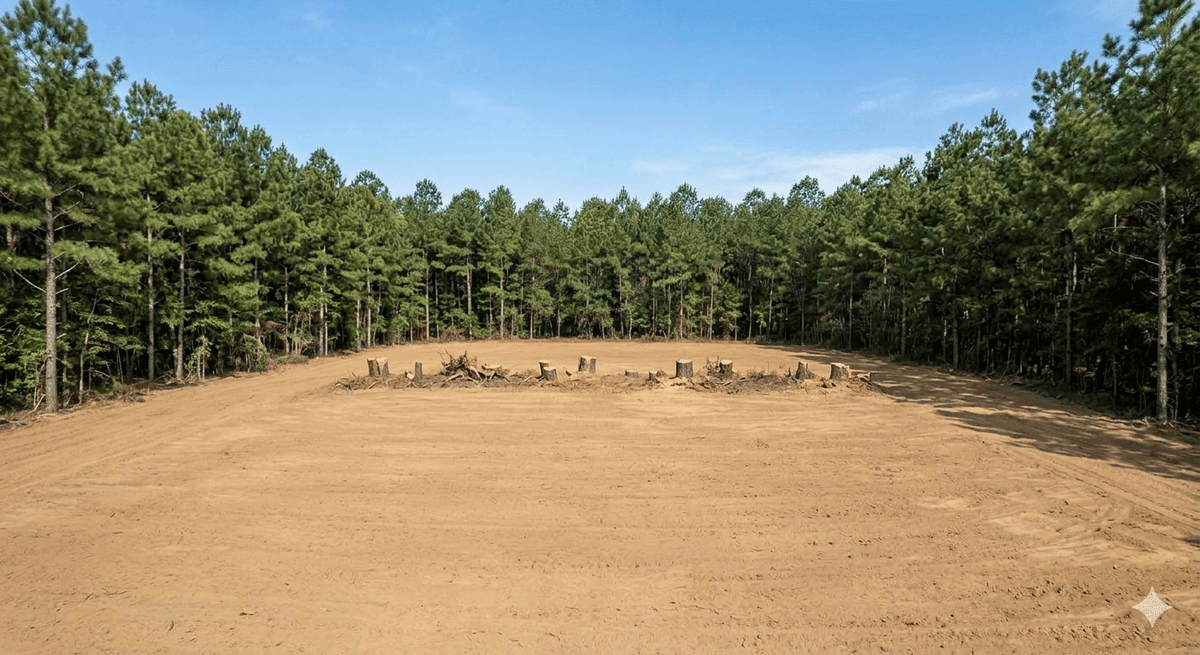
Lot Clearing
Residential lot clearing for new construction — stump removal in Eastman GA is included to leave a build-ready site for Dodge County property owners.
Learn More →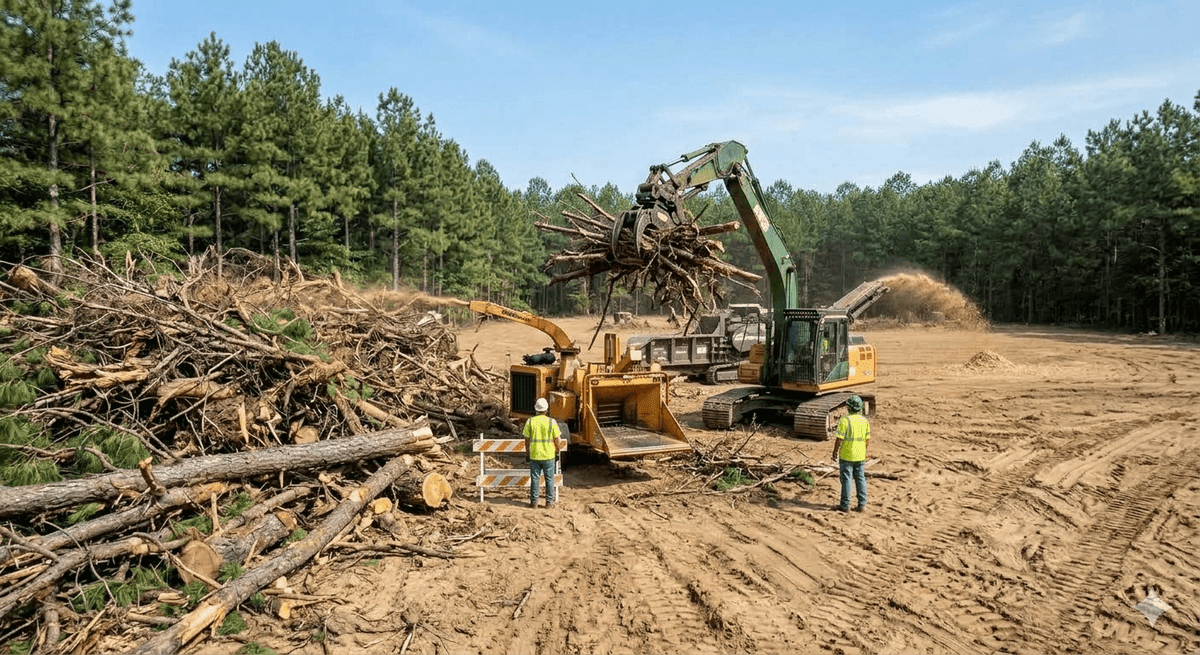
Debris Removal
Haul-off of wood chips, root debris, and cleared material after stump grinding Eastman GA properties — leaving a clean surface ready for grading or landscaping.
Learn More →Properties being developed in Dodge County often need additional services alongside clearing � Eastman Septic for septic installation, Eastman Well Drilling for private water access, and Eastman Gravel for driveway and road base installation all serve Dodge County property owners.
Ready to Get a Free Quote?
Tell us about your property and we'll schedule a free on-site assessment. No pricing until we've seen the land.
Our free quote form is on the home page. Fill it out and we'll follow up to schedule your free on-site stump removal assessment in Eastman or anywhere in Dodge County.
Request My Free Quote →