
Land Clearing —
From Overgrown to Open.
Overgrown timber, out-of-control brush, or stumps blocking your build site? We handle forestry mulching, lot clearing, brush removal, stump grinding, and full site preparation — with a free on-site assessment before you pay a thing.
How much does land clearing cost in Eastman, Dodge County?
Land clearing in Eastman, Dodge County typically runs $1,500 to $5,000 per acre, with forestry mulching averaging $1,000 to $3,500 per acre. Heavily wooded tracts with large pines or hardwoods can reach $6,000 per acre. Middle Georgia's red clay soil affects equipment selection and site conditions. A free on-site assessment is required to price any specific Dodge County property accurately.
7 Land Clearing Services in Eastman & Dodge County, GA
Land clearing in Eastman, GA covers seven core services — forestry mulching, lot clearing, brush clearing, site preparation, stump grinding, debris removal, and full-acreage clearing — each matched to the vegetation density, terrain, and intended use of your Dodge County property.

Land Clearing
Full-service land clearing for residential lots, rural tracts, and multi-acre parcels using excavators and bulldozers matched to our local red clay terrain. We handle access paths, building pads, and agricultural acreage — from compact residential lots to larger rural properties.

Forestry Mulching
Single-pass forestry mulching grinds trees and brush into wood chip mulch in place — no haul-off required, less soil disturbance, and built-in erosion control for our clay-heavy soil. Efficient and clean for residential lots and rural tracts alike.

Brush Clearing
Removes overgrown vines, briars, and scrub growth from residential and rural properties. Middle Georgia's humid climate drives rapid regrowth — thorough clearing includes stump treatment to slow regrowth after the job.
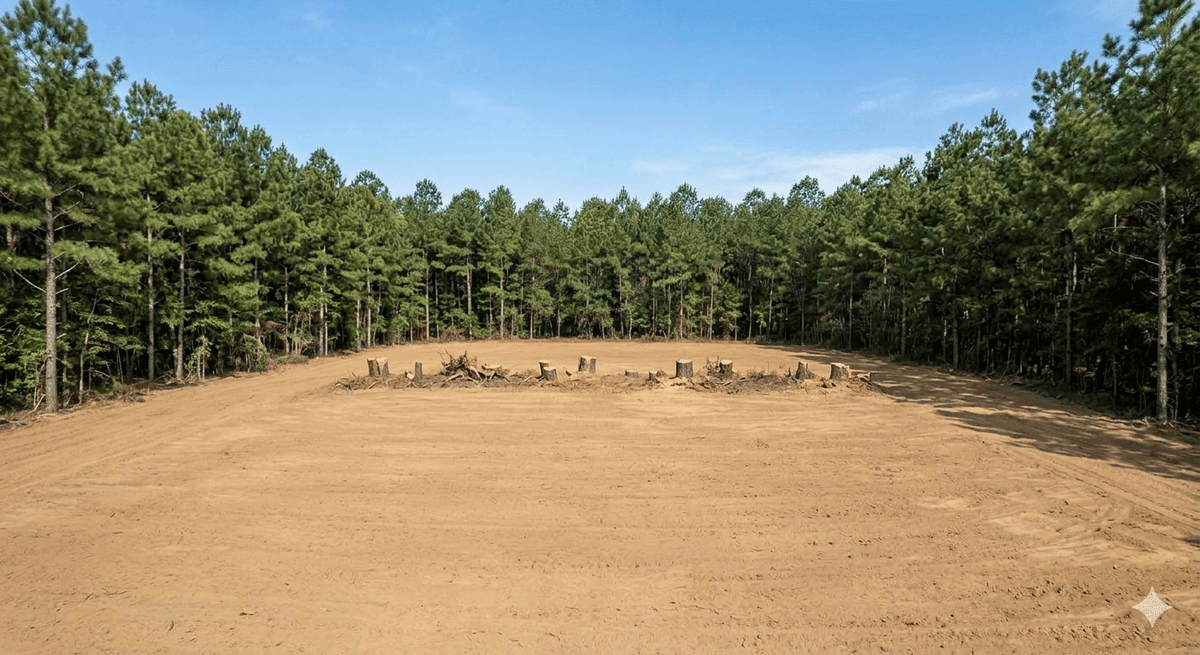
Lot Clearing
Clears wooded or overgrown residential lots for new home construction, mobile home placement, or general property improvement. Lot clearing jobs include stump grinding and surface cleanup to leave a build-ready site.

Site Preparation
Post-clearing site preparation includes rough grading and surface leveling to get your property ready for foundation, driveway, or agricultural use. Clearing is only complete when the site is properly prepped for its intended use.
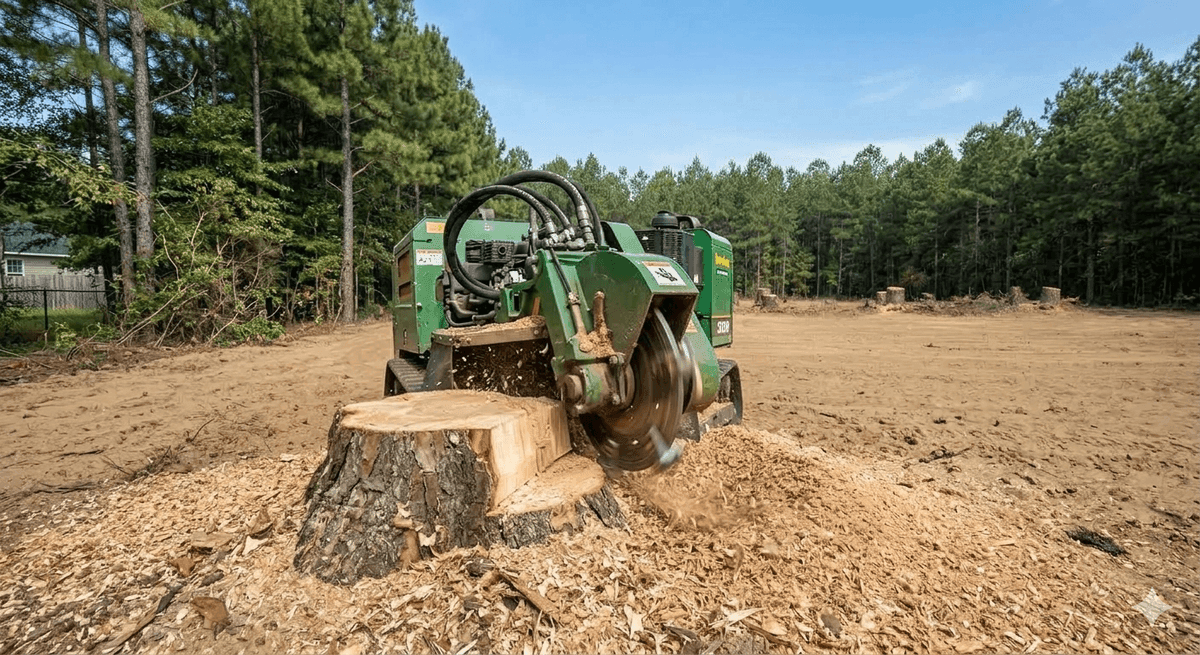
Stump Removal
Grinds stumps flush or below grade following land clearing or as a standalone service. Stumps left in clay soil create drainage problems and attract termites — grinding below grade eliminates both risks and leaves the surface clean and level.
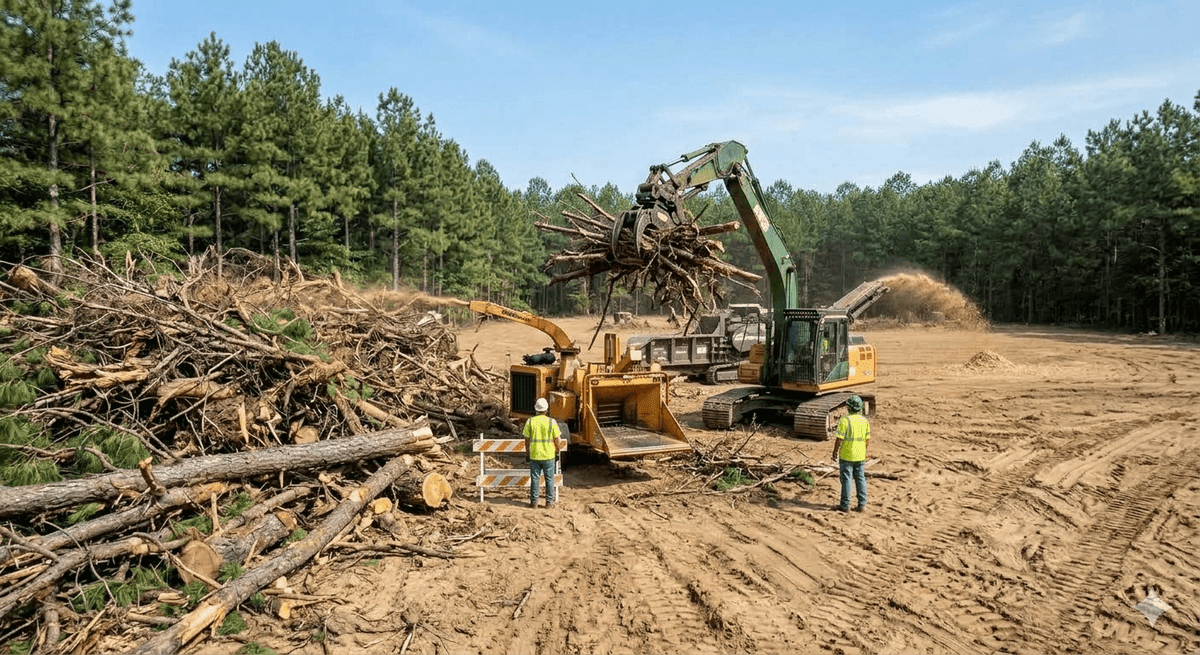
Debris Removal
Hauls or mulches cleared brush, logs, and vegetation from your property. We offer haul-off, mulch-in-place, or pile-for-burning options depending on your preference and local ordinances — your property, your choice on how debris is handled.
Why Local Terrain Matters
The Soil Here Demands the Right Equipment
Middle Georgia's red clay soil becomes dangerously soft after rain and compacts hard when dry. The wrong equipment on wet ground doesn't just damage your land — it creates drainage and foundation problems that last for years. Equipment selection is not interchangeable with standard sandy-soil work.
A Free Site Assessment Prevents Pricing Surprises
Quoting by acreage alone ignores the variables that actually drive cost: tree diameter, access width, stump count, proximity to drainage ditches, and whether debris can be mulched or must be hauled. An on-site assessment is the only way to give you an honest number for your property.
Forestry Mulching vs. Cut-and-Haul
For most residential lots, forestry mulching is faster, cheaper, and better for the soil than traditional cut-and-haul clearing. The mulch layer suppresses regrowth, reduces erosion on red clay, and eliminates truck traffic across your property. For large commercial sites with timber value, a combined approach works better.
Signs Your Property Needs Attention
Red clay soil and fast-growing vegetation can make a neglected lot impassable within one to three growing seasons. These conditions indicate professional clearing may be needed.
- Overgrown brush blocking planned build area or driveway access
- Stumps and root systems remaining from timber harvest or storm damage
- Thick undergrowth reclaiming cleared land after years of neglect
- Property survey reveals tree encroachment on planned structure footprint
- Lot has never been cleared and a building permit is pending
- Fence line obscured by years of vine and brush growth
- Pond site or pasture restoration requires aggressive vegetation removal
How much does land clearing cost?
Clearing typically runs $1,500–$5,000 per acre depending on tree density and method. Projects over one acre require a Georgia EPD Land Disturbance Permit, and our red clay terrain demands equipment that minimizes compaction — making forestry mulching the preferred method for most residential and rural properties.
Land Clearing Eastman GA — Questions & Answers
Answers specific to Dodge County, Georgia — local terrain, Georgia EPD rules, and middle Georgia pricing for land clearing in Eastman and surrounding communities.
How much does land clearing cost in Georgia?
Land clearing typically costs between $1,500 and $5,000 per acre depending on tree density, terrain, and the methods required. Light brush or overgrown grass runs $500 to $1,500 per acre, mixed brush and small trees range from $1,500 to $3,500 per acre, and heavily wooded land with large timber can reach $3,500 to $6,000 or more per acre. Forestry mulching runs approximately $150 to $400 per hour or $1,000 to $3,500 per acre and is often the most cost-effective option where hauling is impractical. A free on-site assessment is the only accurate way to price your specific property.
What is included in land clearing services?
A standard land clearing service typically includes felling trees, removing brush and undergrowth, grinding or hauling stumps, and clearing the surface so the land is accessible and usable. Some jobs also include rough grading, debris disposal, and fence line clearing depending on the property's needs. Each job is scoped based on lot size, tree density, access, and what the land will be used for — residential build site, agricultural use, hunting land, or general property reclamation. A free site assessment ensures nothing is missed in the quote.
Do I need a permit to clear land in Georgia?
A Land Disturbance Permit (LDP) issued by the Georgia EPD is required for any clearing project that disturbs one acre or more of land. Projects close to wetlands, streams, or floodplains may face additional restrictions from the Army Corps of Engineers or state EPD regulations. For construction projects, an NPDES (National Pollutant Discharge Elimination System) permit may also be required to manage stormwater runoff. Smaller residential clearing jobs under one acre typically do not require a state permit, but local county ordinances should always be verified before work begins.
Does land clearing include stump removal?
Stump removal is sometimes included in a full clearing package and sometimes priced separately depending on the job scope and stump size. Forestry mulching grinds stumps as part of the clearing process, making it an all-in-one option for many properties. Traditional clearing with an excavator or bulldozer may leave stumps in place unless stump grinding is specifically added to the scope. Always confirm what is included in your quote — a site assessment makes this clear before work begins.
How long does it take to clear an acre of land?
Clearing one acre of lightly wooded or overgrown land typically takes one to two days with the right equipment. Heavily wooded land with large hardwoods or dense pine stands can take two to four days per acre. Forestry mulching generally moves faster than traditional clearing because it eliminates the separate hauling step — vegetation is processed in place. Wet soil conditions, steep terrain, or limited equipment access can extend the timeline.
What is the best method for clearing wooded land?
The best method depends on what you plan to do with the land afterward. Forestry mulching is generally the most efficient choice for residential lots and rural tracts — no truck traffic, no haul-off costs, and the mulch layer helps with erosion control on red clay soil. Traditional excavator or bulldozer clearing is better suited for large-scale site prep where stumps must be removed and the ground needs grading. A combination approach is common on new construction lots.
What is forestry mulching and how does it work?
Forestry mulching uses a tracked machine with a rotating drum head to grind trees, brush, and undergrowth into wood chip mulch in a single pass. Instead of cutting, piling, hauling, and burning, everything is processed on-site and the resulting mulch layer stays on the ground — improving soil structure and reducing erosion on clay-heavy terrain. It is especially useful on lots where heavy truck traffic would damage the land or where burning isn't practical. A single forestry mulcher can process a surprising amount of vegetation per day with minimal soil disturbance.
Can land clearing cause soil erosion?
Yes — land clearing removes the root systems and ground cover that hold soil in place, making newly cleared land vulnerable to erosion especially during heavy rain. Red clay soil is particularly prone to runoff when exposed because it compacts easily and sheds water rather than absorbing it. Georgia EPD requires erosion and sediment control measures on any clearing project over one acre, including silt fencing, sediment basins, and stabilization of disturbed areas. Leaving a mulch layer from forestry mulching or seeding immediately after clearing helps reduce erosion risk.
How much does forestry mulching cost per acre?
Forestry mulching typically costs between $1,000 and $3,500 per acre, or $150 to $400 per hour depending on the density of vegetation and equipment used. Light brush and small-diameter trees run toward the lower end; thick timber stands with trees over 8 inches in diameter push toward the higher end. Forestry mulching often saves money overall compared to cut-and-haul clearing because debris disposal is eliminated — everything is ground in place. A free on-site quote is the only accurate way to price a specific property.
What equipment is used for land clearing?
Common land clearing equipment includes forestry mulchers, tracked excavators for tree removal and stump pulling, bulldozers for pushing and piling debris on larger tracts, and skid steers with mulching or grapple attachments for tighter residential lots. Equipment selection matters on red clay soil — heavier machines can cause significant compaction on wet ground, which affects drainage and future construction. The right machine for a given property depends on access, lot size, tree diameter, and what the cleared land will be used for.
When is the best time to clear land in Georgia?
Late fall through early spring (October through March) is generally the best time to clear land. Ground conditions are firmer in cooler months, which means less soil compaction from heavy equipment and better access across red clay terrain. Vegetation is also dormant or reduced, making clearing faster and easier. Summer clearing is possible but comes with softer soil after heavy rain and faster regrowth of brush. If timing is flexible, scheduling a winter or early spring clear can reduce cost and improve the quality of the finished site.
Does clearing land increase property value?
Clearing generally increases market value and usability, especially for rural properties where overgrowth blocks access, obscures boundaries, or prevents construction or farming. A cleared lot is easier to survey, easier to sell, easier to build on, and more attractive to buyers than wooded or brush-covered land. Agricultural use, hunting land improvements, and pasture restoration all add measurable value in our rural property market. A wooded 5-acre parcel that is cleared and made accessible for a mobile home or hunting cabin can see a significant jump in appraised value simply because the land is now usable.
How do I clear heavily wooded land?
Clearing heavily wooded land requires professional equipment — hand tools are not effective against mature hardwoods or dense pine stands. The process typically starts with felling large trees, followed by mulching or hauling the trunks and brush, then grinding the stumps. Forestry mulching can handle smaller timber in a single pass. For land with large hardwoods or commercial timber, a combined approach using bulldozer, excavator, and mulcher is most efficient.
What is the difference between land clearing and grubbing?
Land clearing refers to removing above-ground trees, brush, and vegetation, while grubbing is the removal of roots, stumps, and subsurface organic material below grade. Clearing alone leaves stumps in the ground — grubbing removes them entirely, which is required for construction on most build sites where stumps left underground can cause settling or drainage problems. If you are building a home or placing a mobile home, specify that you need grubbing included so the site is truly ready for foundation work.
Can I clear land myself without equipment?
Manual clearing without equipment is only practical for very small areas of light brush and small saplings. Middle Georgia properties typically include significant pine and hardwood growth and dense undergrowth reinforced by red clay root systems. Anything approaching a half-acre of wooded land, or any land with established trees over 4 inches in diameter, realistically requires mechanical equipment. Professional clearing on a modest residential lot often costs less than the time, equipment rental, and disposal fees involved in a DIY attempt.
How much does it cost to clear a lot for a house?
Clearing a standard residential lot for new home construction typically costs between $2,000 and $8,000 depending on lot size, tree density, and whether stump removal and rough grading are included. A lightly wooded half-acre lot might run $1,500 to $3,000. A heavily wooded one-acre lot with large pines or hardwoods, stump grinding, and basic grading can reach $5,000 to $8,000 or more. These ranges reflect middle Georgia market rates — a free on-site assessment is the only accurate way to price your specific property.
What happens to trees and debris after land clearing?
Cleared trees and debris can be handled several ways: forestry mulching grinds everything in place and leaves a wood chip layer that improves soil and reduces erosion; traditional clearing piles the debris for burning (check Georgia Forestry Commission rules — open burning may require a permit); or a contractor hauls the material off-site. Most residential clearing jobs use a combination approach — mulch the brush, haul the logs, grind the stumps. Your site assessment should include a discussion about which disposal method makes sense for your property.
Is burning cleared debris legal in Georgia?
Open burning of cleared land debris is regulated by the Georgia Forestry Commission and may require a burn permit depending on the season and conditions. Georgia has a statewide burn ban that typically applies during dry periods, and local county ordinances may impose additional restrictions. Burning without the proper permit can result in fines. Forestry mulching eliminates the need for burn piles entirely — debris is processed on-site and the resulting mulch layer benefits the soil. Always verify current burn rules with local authorities before scheduling any debris burning.
How do I prepare land for construction after clearing?
Site preparation after clearing typically involves stump grinding or grubbing, rough grading to establish a level pad, soil compaction testing, and installing erosion controls before construction begins. Red clay soil compacts well when dry but becomes unstable when wet — timing grading work during drier months improves results. Properties also need a percolation test if a septic system is planned. If the property will rely on a private water source, well drilling can be coordinated with clearing.
What should I ask a land clearing contractor before hiring?
Before hiring a land clearing contractor you should ask: Will you do an on-site assessment before giving a price? What equipment will you use and is it right for my terrain? Is stump removal included or priced separately? How will debris be handled — mulched, hauled, or piled for burning? Do you follow Georgia EPD erosion and sediment control requirements? What does a finished cleared lot look like? A contractor who answers these questions specifically and asks to see your property before quoting is one worth working with.
What is the difference between forestry mulching and land clearing?
Land clearing is the broad process of removing trees, brush, and vegetation from a property — which can be accomplished using bulldozers, excavators, or forestry mulching equipment. Forestry mulching is one specific method within land clearing that uses a tracked machine with a rotating drum head to grind all vegetation into wood chip mulch in a single pass without hauling debris off-site. The key difference is what happens to the cleared material: traditional land clearing cuts and piles material for hauling or burning, while forestry mulching processes everything on-site and leaves a mulch layer that reduces erosion on red clay soil. For most residential lots and rural tracts, forestry mulching is faster and more cost-effective than traditional cut-and-haul clearing.
Do I need to clear land before drilling a well?
You typically need to clear access to the drill site before a well drilling crew can mobilize — drill rigs require a clear, level path and a working area around the bore location. Dense brush, overgrown vegetation, or standing timber blocking the access route can delay or prevent well installation. A focused clearing job targeting the access path and drill pad area is usually sufficient — full property clearing is not always required. Well drilling and clearing contractors can coordinate to sequence site access work before the drilling crew arrives.
Do I need to clear land before installing a septic system?
Septic system installation typically requires clearing the septic tank area, drain field footprint, and the equipment access path — vegetation and tree roots in the drain field zone can compromise the system's long-term performance. Perc testing for a new septic system also requires clear ground access for soil evaluation. A targeted clearing job focused on the drain field area and equipment access is usually all that is needed before septic installation begins.
Dodge County and Surrounding Communities
We provide lot clearing, brush clearing, forestry mulching, and site preparation throughout Dodge County — from residential lots in Eastman to rural tracts in the county's smaller communities.
Not sure if we cover your property? Submit a quote request and include your address or nearest community — we'll confirm coverage and respond quickly.
Local resources: City of Eastman — Dodge County Government
Rural properties being developed for the first time in Dodge County typically need septic service, a private well, and gravel road access alongside clearing — Eastman Septic, Eastman Well Drilling, and Eastman Gravel all serve Dodge County property owners.
Get a Free Quote
Tell us about your property and project. We'll review your request and follow up to schedule a free on-site assessment before providing any pricing.
Locally Rooted
in Middle Georgia
We connect property owners with qualified local providers who know the terrain — from the red clay soil that makes equipment selection critical to the pine and hardwood timber density typical of our area.

- Eastman, GA 31023
- Serving all of Dodge County, Georgia
- Email Us