Land Clearing Debris Removal
Eastman GA & Dodge County
Professional land clearing debris removal in Eastman GA — haul-off, mulch-in-place, or pile-for-burning options for cleared brush, logs, and vegetation in Dodge County. Handled as part of a full clearing job or as a standalone debris removal service.
Debris Removal Options for Dodge County Clearing Jobs
After trees are felled and brush is cleared, land clearing debris removal in Eastman GA is one of the most important decisions in the entire project. Debris disposal method affects cost, timeline, soil condition, and what the finished property looks like. There is no single right answer — it depends on your property, your plans, and local regulations.
The three main debris removal options are: mulch in place (forestry mulching processes everything on-site, no haul-off needed), haul-off (material is loaded and removed from the property for disposal or salvage), or pile for burning (debris is windrow-piled for burning when conditions and permits allow). Many Dodge County clearing jobs use a combination approach for debris removal — mulch the brush, haul the logs, grind the stumps.
We discuss debris removal in Eastman as part of the initial site assessment. Knowing what you plan to do with the cleared land guides the right disposal approach and prevents surprises in cost or timeline when the job is underway.
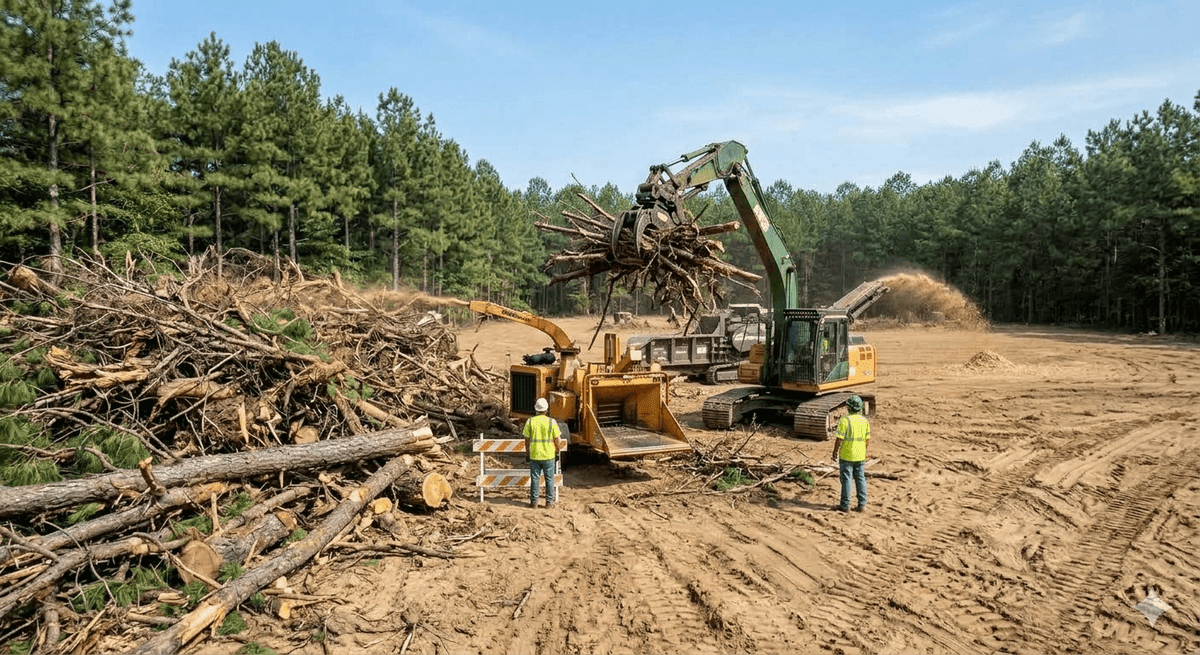
How much does debris removal cost in Dodge County?
Debris removal in Eastman, Dodge County, Georgia costs $200–$800 per load depending on volume, material type, and distance to the nearest approved disposal site. Dodge County's nearest certified construction-and-demolition landfill is in Dublin, roughly 30 miles east — so on-site forestry mulching or chipping often costs less than haul-off while producing usable mulch for erosion control on your property.
Three Ways We Handle Debris Removal in Eastman GA
Each debris removal method has trade-offs. We help Dodge County property owners choose the right one — or the right combination.
Debris Removal Eastman GA — FAQ
What are my options for debris removal after land clearing?
Land clearing debris removal in Eastman GA and Dodge County can be handled three main ways: forestry mulching grinds everything in place and leaves a wood chip layer; traditional cut-and-haul clearing piles the debris for burning or loads it onto trucks for off-site disposal; or a combination approach is used — mulch the brush, haul the logs, grind the stumps. The right debris removal option depends on your property, your plans, and current burn rules in Dodge County. Disposal method is always discussed at the site assessment before work begins.
Is burning cleared debris legal in Georgia?
In Dodge County, Georgia, open burning of cleared land debris is regulated by the Georgia Forestry Commission and requires a permit depending on the season and conditions. Georgia has a statewide burn ban that applies during dry periods and fire weather watches. Burning without the proper permit can result in fines and liability. Forestry mulching is the debris removal alternative that eliminates burn piles entirely — material is processed on-site and the resulting mulch layer benefits the soil. Always verify current burn rules with Dodge County or the Georgia Forestry Commission before scheduling debris removal by burning.
How much does debris removal cost after land clearing in Eastman GA?
Land clearing debris removal cost in Dodge County depends heavily on disposal method and material volume. Forestry mulching — which grinds debris in place — is often the most cost-effective debris removal option because it eliminates separate hauling fees. Traditional haul-off adds $200 to $600 or more per truckload depending on load size and haul distance. On large clearing jobs with significant timber volume, some debris removal cost can be offset if the timber has salvage value. Debris removal method and cost are always discussed at the initial site assessment.
Can everything be mulched in place?
Forestry mulching can process most residential and rural brush, saplings, and trees up to 8–12 inches in diameter in a single pass — making it the preferred debris removal method for most Eastman GA properties. Large-diameter hardwood timber — mature oaks and pines over 18 inches — may need to be felled and processed separately before the mulcher handles the remaining brush. Very high volumes of large timber on a single lot may also require haul-off debris removal while the brush is mulched in place. The on-site assessment determines which approach makes sense for your specific Dodge County property.

Forestry Mulching
The most efficient debris removal method for Eastman GA properties — grinds everything in place, eliminates haul-off costs, and improves Dodge County soil in the process.
Learn More →
Brush Clearing
Targeted brush removal in Dodge County — includes debris removal as part of every job, whether mulched, hauled, or piled for burning.
Learn More →
Land Clearing
Full land clearing debris removal planning from the start — scope, method, and cost all confirmed before work begins on your Eastman GA property.
Learn More →Properties being developed in Dodge County often need additional services alongside clearing � Eastman Septic for septic installation, Eastman Well Drilling for private water access, and Eastman Gravel for driveway and road base installation all serve Dodge County property owners.
Ready to Get a Free Quote?
Tell us about your property and we'll schedule a free on-site assessment. No pricing until we've seen the land.
Our free quote form is on the home page. Fill it out and we'll follow up to schedule your free on-site debris removal assessment in Eastman or anywhere in Dodge County.
Request My Free Quote →